I have come across a number of articles claiming that B2B communications do not fall under the scope of the EU General Data Protection Regulation and it will simply be business as usual come 25 May 2018. I believe this is a mistaken view and B2B marketers need to adapt and change to be compliant in the rapidly changing privacy landscape we face.
The key here is the definition of personal data under the GDPR. If a business email address is personal data it will fall under the scope of the Regulation. Article 4.1 of the GDPR states:
‘personal data’ means any information relating to an identified or identifiable natural person (‘data subject’); an identifiable natural person is one who can be identified, directly or indirectly, in particular by reference to an identifier such as a name, an identification number, location data, an online identifier or to one or more factors specific to the physical, physiological, genetic, mental, economic, cultural or social identity of that natural person;
There is no debate that a personal email address, such as john.smith@yahoo.comconstitutes personal data, so why would john.smit@CompanyX.com be any different?
Simply because my email address relates to me at work does not mean I am no longer a data subject and I am identifiable from it, in just the same way as I would be identifiable from my personal email address.
If an organisation is relying on Consent as the lawful basis for processing personal data, even when it comes to business email addresses, it will need to comply with the definition of Consent, as per Article 8.11 which says Consent means:
"any freely given, specific, informed and unambiguous indication of the data subject's wishes by which he or she, by a statement or by a clear affirmative action, signifies agreement to the processing of personal data relating to him or her."
In the Information Commissioner’s Office’s draft Guidance on Consent it clearly states, “Consent requires a positive opt-in.”
It is however not all doom and gloom, Consent with an opt-in is not necessarily the only way and prospecting is not dead and buried. The ICO has been keen to stress Consent is only one of six legal grounds for processing personal data under the GDPR. In the draft Consent Guidance, it says:
You should always choose the lawful basis that most closely reflects the true nature of your relationship with the individual and the purpose of the processing. If consent is difficult, this is often because another lawful basis is more appropriate, so you should consider the alternatives.
The other lawful bases are; contract, legal obligation, vital interests, public task and last but not legitimate interests. Legitimate Interests may well prove most appropriate for some B2B activities.
You can consider the use of Legitimate where another lawful basis is not available due to the nature and/or scope of the proposed activities, or where there are a number of lawful bases that could be used but Legitimate Interests is the most appropriate. I would stress this should not be seen as a simpler route to take than Consent. It is crucial that organisations give this careful consideration and ensure they have balanced their own interests with the privacy rights and freedoms of individuals. It is advisable to document any assessment and decision taken, to clearly demonstrate why the organisation considers Legitimate Interests to be appropriate in any given scenario. The use of Legitimate Interests must also be transparent, i.e. individuals must be clearly informed that you are relying on this lawful basis and they must have a clear opportunity to object to such processing.
Another point to consider is the proposed new ePrivacy Regulation governing electronic regulations. The new Regulation is due to replace the 2002 ePrivacy Directive (amended 2009). This Directive gave us the Privacy and Electronic Communications Regulations (PECR) in the UK. PECR clearly distinguishes between marketing to people within companies and marketing to individuals; the rules for the former are more relaxed and allow for an opt-out.
It had been hoped we would have a final text of the ePrivacy Regulation soon, but it is still being debated and has yet to be agreed. However, as it currently stands, no clear distinction has been provided in draft texts between B2B and B2C communications. The same level of protection may therefore stand for both. There is a hope (which may be fading) that member states will be able to make provision for this under national law. However, even if this exemption holds, named corporate B2B data is still personal data, and would therefore have to be processed in line with the GDPR. It will remain a choice between using consent or legitimate interests for sending electronic B2B communications.
The aim was for the ePrivacy Regulation to be implemented in line with the GDPR on 25 May, but this is increasingly unlikely, so it is expected PECR will run alongside the GDPR in the interim.
If you would like to learn more about GDPR and understand how it might affect your or if you would like us to assess how compliant you are for the GDPR and it's implications for your business data: email peter.davies@globalsoftwareleads.com
EU General Data Protection Regulation Qualified (GDPR F) By the International Board for IT Governance Qualifications
Newly Updated Global ERP Customer Lists – 2018 Q4 25% Off
ERP Technology Marketing Lists
#SAPCustomerList #OracleEBSCustomerList #MicrosoftDynamicsCustomerList- Our 2018 ERP Customer Lists (SAP Customer List, Oracle EBS Customer List, Microsoft Dynamics Customer List and many more - see below full list) are all created through focused telephone and web based research supported by a Global database of over 1 million companies.
We assist our clients to understand, target and build relationships with key technology decision makers at all levels.
Our clients are typically technology companies and their partners who are involved in selling into the ERP (i.e. SAP, Oracle, Microsoft, Infor, Sage etc.) and wider technology markets (i.e. BI, CRM, Finance, Supply Chain, BW, Storage, Networking etc.) and with over 150 technology fields to choose from we cover most mainstream technologies.
Q4 2017 – Get a 25% discount on all our ERP Customer Lists and wider Technology Customer Lists
All our lists are researched in full every 90 days and are identified through telephone marketing, online surveys and internet research.
Uniquely we offer a 45 day guarantee to replace any hard bounces or incorrect data.
ERP Application Users Lists
We have over 50 ERP Software applications to select from including the most popular such as our SAP Customer List, Oracle EBS Customer List, Microsoft Dynamics Customer List and Older incumbent ERP Customer lists (listed below).
If you browse the list below to see if we have a relevant ERP software users list in your region then let us know your requirement and we get a count and cost for you.
Table 1: All ERP Applications available
ERP Breakdowns
The following chart represents a summary of the ERP applications that we can provide across all the regions mentioned above with emphasis on North America and Europe.
Table 2: All ERP Applications available by % Breakdown
If you have a requirement for a specific technology not listed please let us know by using the email below and we will provide a bespoke count for you. Email us at: sales@globalsoftwareleads.com
Job Function or Job Title Specific Contact Lists
Global Software Leads also provides contact lists regardless of installed technology based upon the Job Title or Job Area/Function and Job Level (i.e. Seniority).
All our lists are delivered with full Company details including Full Company Name, Address, Telephone, Fax, URL, Industry, Employees, Financials, Parent, Technology Installed and Contact details including Job Title, Email address and direct telephone where available.
Contact Global Software Leads
If you have any requirements and need a count and price for the purchase of a particular list please email us at: sales@globalsoftwareleads.com
A Guide To Selection Criteria
We provide detailed segmentation using a variety of available parameters at a company and contact level so if you have a simple or complex count request then let us know. You can select by:
Geography
Size (Employees or users)
Sales Revenues
Industry Sector
SIC Codes (UK, USA, ANZ, NAICS)
Parent Country
Software Application
Hardware Application
Operating System
Database
Contact Job Role or Title
Contact Seniority (Job Level)
Direct Telephone
Email
Terms of Business
For details or our Terms of business please follow this link: Terms of Business
CLOUD ERP: THE GREAT ENABLER OF GROWTH KEEP IT SIMPLE, MANAGE RISK, MAINTAIN
CONTROL
Every company has aspirations to grow. Growth is exciting, yet it can also be challenging, especially for those companies that have already transitioned from small to mid-size. Operations are more complicated now and new paths to growth are riskier. The Enterprise Resource Planning (ERP) solution that got you to your current size may not be sufficient to power you through to the next level of growth.
WHAT’S CHANGED?
Growth aspirations aren’t new. Growth oriented companies have been dealing with the challenges of global, complex supply chains for decades now. Operating across a distributed environment has become a way of life for a large percentage of businesses today, even smaller ones.
No capital expenditure required; no need to build out a data center, or even put hardware or a huge information technology (IT) staff in country. And Mint Jutras research shows that solutions delivered as software as a service (SaaS) reach their first go-live milestone 14% faster. The access any time, from anywhere nature of a cloud solution is conducive to supporting distributed users and bringing up remote sites rapidly and easily. While cyber-security is an understandable concern to all today, SaaS solution providers not only deliver added security, but also the peace of mind of business continuity in the event of a disaster, either natural or man-made.
#SAPUsersList - Global Software Leads have been providing a carefully researched European & North American SAP Customer Lists for over 12 years.
Our SAP Users List provides detailed coverage of 16K+ SAP Customers (7.4K North America and 8.4K European) SAP Customers with Over 150K key decision makers along with the SAP version and modules deployed in each case.
We focus on the enterprise technology marketplace and our SAP research team have profiled the largest European and North American 16K SAP installations and provide full access to the list (unlimited use) for SAP partners under one single license (see below).
The list is also covered by our unique 45 day replacement policy for any hard bounces or incorrect data identified within that time frame. Full terms can be seen here: http://globalsoftwareleads.com/terms/
SAP Customer List Sample offer
We have a test* offer for Sapphire Now exhibitors as follows to include 100% emails.
Table 1: SAP Customer sample offer
* Test samples can be segmented as required to include selections by: Sector/Industry, Size (employees or sales revenues), Geography, SAP Modules or Version, contact job role/title and Contact level.
SAP User List Research
Our research provides SAP company details (including address, telephone, Industry, Sales, employees, Ultimate Parent details, Fortune 1,000 rank – if applicable etc.) along with key SAP Decision makers with email and telephone details.
North America SAP User List Overview
Below is a summary of the SAP Users List by the number of Companies, Contacts and Emails provided across all the SAP customer installations.
Table 2: European and North American User List Summary
SAP User List Version and Module Information
Our SAP Users List coverage includes the SAP R/3 customer list, SAP ECC5.0 customer list, SAP ECC6.0 customer list, SAP Business Objects customer list, SAP SuccessFactors customer list, SAP HCM customer list, SAP BW customer list, SAP HANA customer list, SAP NetWeaver customer list, SAP APO customer list, SAP SRM customer list etc. We cover all SAP Functional modules and SAP Technical modules.
SAP User List - Download a Sample iProfile
Please download a sample profile by following the link below to demonstrate the company data and detailed contacts available: Download Here
SAP User List - Contact Us
To discuss the list, obtain a sample or get a segmented count and cost please contact us by:
#SAPCustomerList - Global Software Leads have been providing a carefully researched North American SAP Customer List for over 12 years.
The database provides detailed coverage of 7,366 SAP Customers to provide a comprehensive SAP User List with 84,563 key SAP decision makers and influencers along with the detailed SAP version and modules deployed in each case.
We focus on the enterprise technology marketplace and our SAP research team have profiled the 7,366 SAP installations from the largest North American SAP customers and provide full access to the list for SAP partners under one single license (see below).
SAP Customer List Sample offer
We have a test* offer for Sapphire Now exhibitors as follows to include 100% emails.
Table 1: Sapphire Now sample offer
* Test sample can be segmented as required to include selection by: Sector/Industry, Size (employees or sales revenues), Geography, SAP Modules or version, contact job role/title and level.
SAP Customer List Research
Our research provides SAP company details (including address, telephone, Industry, Sales, employees, Ultimate Parent details, Fortune 1,000 rank – if applicable etc.) along with key SAP Decision makers with email and telephone details.
North America SAP Customer List Overview
Below is a summary of the SAP Customer List by the number of Company, Contact and Emails provided across all the SAP installations.
* North America includes USA and Canada.
Table 1: North America SAP Customer List Overview
SAP User List Version and Module Information
Our SAP Customer List coverage includes the SAP R/3 customer list, SAP ECC5.0 customer list, SAP ECC6.0 customer list, SAP Business Objects customer list, SAP SuccessFactors customer list, SAP HCM customer list, SAP BW customer list, SAP HANA customer list, SAP Netweaver customer list, SAP APO customer list, SAP SRM customer list etc. We cover all SAP Functional modules and SAP Technical modules.
Our SAP customer list is the most recent, comprehensive and accurate list of SAP customers from North America and offers detailed research at a company and contact level.
SAP User List - Contact Us
To discuss the list, obtain a sample or get a segmented count and cost please contact us by:
For over 12 years Global Software Leads have delivered high quality, researched technology marketing lists, intelligence and leads.
Our most popular ERP Customer Lists include our SAP Customer List, Oracle EBS Customer List, PeopleSoft Customer List, JDE Customer List, Microsoft Dynamics Customer List, Sage Customer List, Salesforce Customer List, NetSuite CustomerList along with many more ERP Customer Lists (see full list below).
For Q1 2017 we have a number of offers on individual and bundled (multiple) list purchases across any of our technology lists with up to 50% discount on many.
For full details of all lists you can view each ERP List by Application and other Technology focused lists are summarized by geography below or follow this link to our Global list page which details all our lists and data collection methodologies. Click Here for more details: Global List Overview
Technology Marketing Lists
Our ERP & Technology Marketing Lists are all created through focused telephone and web based research supported by a Global database of over 1 million companies. We assist our clients to understand, target and build relationships with key technology decision makers at all levels.
Our clients are typically technology companies and their partners who are involved in selling into the ERP (i.e. SAP, Oracle, Microsoft, Infor, Sage etc.) and wider technology markets (i.e. BI, CRM, Finance, Supply Chain, BW, Storage, Networking etc.) and with over 150 technology fields to choose from we cover most mainstream technologies.
You can select your lists by any of the technology categories below and many geographies by country, region or even globally:
Software
Hardware
Operating Systems
Databases
Networking
Storage
All our lists are researched in full every 90 days and uniquely we offer a 45 day guarantee to replace any hard bounces or incorrect data identified through telephone marketing or other sales or marketing campaign activity.
ERP & Technology User Lists
Our technology lists cover many Software and Hardware technologies Globally (please note some technologies will only be available in certain regions and countries so please see the table below for availability).
If you have a particular ERP Customer List requirement or an alternate Technology focused list please let us know by emailing us at sales@globalsoftwareleads.com and we will provide a tailored count and quotation based upon your specific needs.
Our Technology iProfiles take customer intelligence to the next level. We deliver intelligence at a Corporate and Contact level to enable sales teams to be better informed and strategically advantaged to assist in a knowledge led sales development process.
If you sell complex solutions into enterprise wide accounts this is a service will assist your sales process and make marketing positioning more relevant.
Additionally our technology iProfiles will uncover the detailed IT Infrastructure including the software applications, hardware platforms, strategic drivers and projects affecting your potential clients purchasing options.
Download a Oracle EBS Sample iProfile Here:Scottish Water
iProfiles | delivering measurable sales & marketing intelligence and benefits
iProfiles: provide management with and insight into markets and prospect accounts so they can continually refine sales and marketing strategy
iProfiles: create an understanding of how key accounts operate at a strategic, departmental and contact level to assist in sales and marketing deployment and approach
iProfiles: deliver technology deployed and IT infrastructure research to establish an IT and ERP footprint within each account
iProfiles: proactively identifiy sales opportunities in existing and new accounts to inform account managers of sales issues, projects, opportunities and thereby deliver new business opportunities for informed and intelligent sales delivery.
Created as a method of delivering account penetration the iProfiles account profiling service is designed specifically for sales and marketing teams involved in high value, complex technology sales development.
iProfiles provides our clients with a highly informed and strategic platform to market, and sell, at the most senior level with the confidence of having a valuable tool to assist sales development at all levels.
Utilising a unique blend of in-house knowledge with desk, web and telephone research (primary and secondary levels) we deliver a detailed understanding of each organisation’s prospects business, technology deployed and key areas for ERP and technology investment, as well as defining the procurement process and IT strategy.
Contact
For further details please email sales@globalsoftwareleads.com or call us on +44 20 3642 0322 (UK) or +1 786 2244 024 (USA)
Global ERP Customers List
For 12 years Global Software Leads have been the providers of a Global ERP Customers List including a detailed SAP Customer List & Oracle EBS Customer List and have a wealth of experience in dealing with the partner ecosystem of both SAP & Oracle. Our ERP Lists have been used by over 350 ERP partners Globally over the last 10 years and many continue to use our services over .
The ERP Market
Enterprise Resource Planning (ERP) systems integrate all of an organization’s departments, divisions, lines of business, and geographical locations into a unified enterprise-wide information system.
Our company background and management experience has been, in the main, within the ERP Market with keen focus on SAP, Oracle, Microsoft, Infor and others in this unique and well-trodden space which has become increasingly more competitive in the last few years.
With key market leaders dictating the way ERP software is deployed in many cases we are uniquely positioned to know which ERP software is deployed and where. Our industry intelligence is paramount to the success of our ERP marketing practice which focuses on SAP, Oracle and Microsoft intelligence as well as other peripheral but no less important competitor products in the market.
Currently the market share of SAP, Oracle and Microsoft ERP technologies shows that the three main protagonists own virtually 50% of the market. We know who these customers are and importantly understand what makes them tick. So you have a need to sell to or wish to understand these customers in more detail then talk to us about how you can market your products and service more effectively in this unique market.
SAP ERP (BUSINESS SUITE)
SAP has a base of more than 40,000 ERP installations, thereof approximately 20,000 SAP Business All-in-One deployments from the SAP partner ecosystem. Eighty-five percent of them are already on the latest version ERP 6.0 enhancement pack 6, the base platform for them to leverage such latest technologies as SAP HANA. If you want additional information on these 40,000 customers email us at sales@globalsoftwareleads.com
ORACLE ERP (EBS, PEOPLESOFT, JDE)
In the ERP market, Oracle has more than 30,000 customers. The breakdown is as follows 20,000 on Oracle E-Business Suite, 4,000 on PeopleSoft Enterprise and 3,000 on JD Edwards Enterprise One and World. Currently Oracle has more than 400 Fusion Applications customers. If you want additional information on these 30,000 customers please email us at sales@globalsoftwareleads.com
ERP Marketing Share 2013
The chart below shows the current market share of the main 3 ERP providers and the rest of the market comparatively.
Contact Us
If you require any further detail about our ERP lists or have any selection criteria you would like to run let us know what your specific selection criteria you require. Email: sales@globalsoftwareleads.com
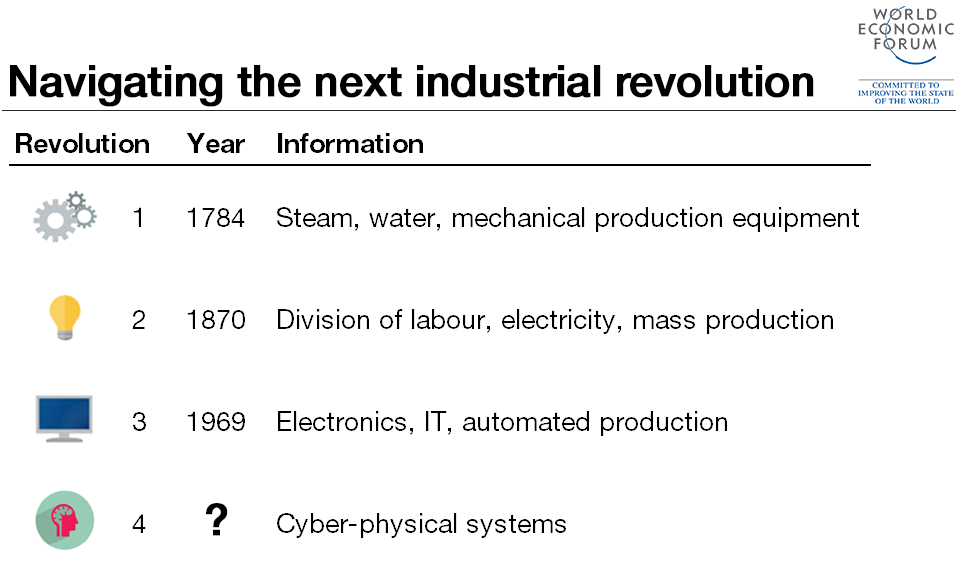
With the advent of Industry 4.0, as announced at the World Economic Forum, and Digital Transformation we stand on the brink of a technological revolution that will fundamentally alter the way we live, work, and relate to one another. In its scale, scope, and complexity, the transformation will be unlike anything humankind has experienced before.
This has a real impact on technology and in particular SAP Customers who will need to leverage SAP HANA in order to deliver the real time information needs of its users and customers in the next few years. Coupled with the withdrawal of support for the SAP ECC product set in early 2022 SAP HANA is the only real alternative.
SAP HANA is currently being implemented by many SAP customers but the real triggers for HANA’s implementation for SAP BW (Business Warehouse), BOBJ (BusinessObjects) customers and workforce facing processes like Talent Management who will all need to harness the power of data and the real time access of business intelligence at a micro level.
In preparation for this we have started a SAP HANA Research Programme to identify those early adopters of SAP HANA through a targeted campaign aimed at those SAP BW and BOBJ customers to establish if and when they will be looking to implement SAP HANA.
SAP HANA Research Programme (SHRP)
The SHRP will take use the following methodology and deliver unique real time leads for SAP Partners in the North American and European markets initially.
Targeting
SAP BW and SAP BOBJ Customers will be segmented as a priority
Research Methodology
Internet based research to identify any signs of SAP HANA required skills or implementations
Telephone research at a decision maker or influencer level to scope out:
Project implementation details
Budget
Timing
Decision Maker Contact org charts and details
Lead Output
PDF format report including:
Full company details
Detailed scope of project(s) for any implementations
If you would like more details on how to receive our unique SAP HANA leads or would like information about our researched SAP Customer Lists then please email us at sales@globalsoftwareleads.com today.
Please hurry as this is on a first come first serve basis.
We stand on the brink of a technological revolution, (Industry 4.0 and Digital Transformation) that will fundamentally alter the way we live, work, and relate to one another. In its scale, scope, and complexity, the transformation will be unlike anything humankind has experienced before.
We do not yet know just how it will unfold, but one thing is clear: the response to it must be integrated and comprehensive, involving all stakeholders of the global polity, from the public and private sectors to academia and civil society.
The First Industrial Revolution used water and steam power to mechanize production. The Second used electric power to create mass production. The Third used electronics and information technology to automate production. Now a Fourth Industrial Revolution is building on the Third, the digital revolution that has been occurring since the middle of the last century. It is characterized by a fusion of technologies that is blurring the lines between the physical, digital, and biological spheres.
There are three reasons why today’s transformations represent not merely a prolongation of the Third Industrial Revolution but rather the arrival of a Fourth and distinct one: velocity, scope, and systems impact. The speed of current breakthroughs has no historical precedent. When compared with previous industrial revolutions, the Fourth is evolving at an exponential rather than a linear pace. Moreover, it is disrupting almost every industry in every country. And the breadth and depth of these changes herald the transformation of entire systems of production, management, and governance.
The possibilities of billions of people connected by mobile devices, with unprecedented processing power, storage capacity, and access to knowledge, are unlimited. And these possibilities will be multiplied by emerging technology breakthroughs in fields such as artificial intelligence, robotics, the Internet of Things, autonomous vehicles, 3-D printing, nanotechnology, biotechnology, materials science, energy storage, and quantum computing.
Already, artificial intelligence is all around us, from self-driving cars and drones to virtual assistants and software that translate or invest. Impressive progress has been made in AI in recent years, driven by exponential increases in computing power and by the availability of vast amounts of data, from software used to discover new drugs to algorithms used to predict our cultural interests. Digital fabrication technologies, meanwhile, are interacting with the biological world on a daily basis. Engineers, designers, and architects are combining computational design, additive manufacturing, materials engineering, and synthetic biology to pioneer a symbiosis between microorganisms, our bodies, the products we consume, and even the buildings we inhabit.
Challenges and opportunities
Like the revolutions that preceded it, the Fourth Industrial Revolution has the potential to raise global income levels and improve the quality of life for populations around the world. To date, those who have gained the most from it have been consumers able to afford and access the digital world; technology has made possible new products and services that increase the efficiency and pleasure of our personal lives. Ordering a cab, booking a flight, buying a product, making a payment, listening to music, watching a film, or playing a game—any of these can now be done remotely.
In the future, technological innovation will also lead to a supply-side miracle, with long-term gains in efficiency and productivity. Transportation and communication costs will drop, logistics and global supply chains will become more effective, and the cost of trade will diminish, all of which will open new markets and drive economic growth.
At the same time, as the economists Erik Brynjolfsson and Andrew McAfee have pointed out, the revolution could yield greater inequality, particularly in its potential to disrupt labor markets. As automation substitutes for labor across the entire economy, the net displacement of workers by machines might exacerbate the gap between returns to capital and returns to labor. On the other hand, it is also possible that the displacement of workers by technology will, in aggregate, result in a net increase in safe and rewarding jobs.
We cannot foresee at this point which scenario is likely to emerge, and history suggests that the outcome is likely to be some combination of the two. However, I am convinced of one thing—that in the future, talent, more than capital, will represent the critical factor of production. This will give rise to a job market increasingly segregated into “low-skill/low-pay” and “high-skill/high-pay” segments, which in turn will lead to an increase in social tensions.
In addition to being a key economic concern, inequality represents the greatest societal concern associated with the Fourth Industrial Revolution. The largest beneficiaries of innovation tend to be the providers of intellectual and physical capital—the innovators, shareholders, and investors—which explains the rising gap in wealth between those dependent on capital versus labor. Technology is therefore one of the main reasons why incomes have stagnated, or even decreased, for a majority of the population in high-income countries: the demand for highly skilled workers has increased while the demand for workers with less education and lower skills has decreased. The result is a job market with a strong demand at the high and low ends, but a hollowing out of the middle.
This helps explain why so many workers are disillusioned and fearful that their own real incomes and those of their children will continue to stagnate. It also helps explain why middle classes around the world are increasingly experiencing a pervasive sense of dissatisfaction and unfairness. A winner-takes-all economy that offers only limited access to the middle class is a recipe for democratic malaise and dereliction.
Discontent can also be fueled by the pervasiveness of digital technologies and the dynamics of information sharing typified by social media. More than 30 percent of the global population now uses social media platforms to connect, learn, and share information. In an ideal world, these interactions would provide an opportunity for cross-cultural understanding and cohesion. However, they can also create and propagate unrealistic expectations as to what constitutes success for an individual or a group, as well as offer opportunities for extreme ideas and ideologies to spread.
The impact on business
An underlying theme in my conversations with global CEOs and senior business executives is that the acceleration of innovation and the velocity of disruption are hard to comprehend or anticipate and that these drivers constitute a source of constant surprise, even for the best connected and most well informed. Indeed, across all industries, there is clear evidence that the technologies that underpin the Fourth Industrial Revolution are having a major impact on businesses.
On the supply side, many industries are seeing the introduction of new technologies that create entirely new ways of serving existing needs and significantly disrupt existing industry value chains. Disruption is also flowing from agile, innovative competitors who, thanks to access to global digital platforms for research, development, marketing, sales, and distribution, can oust well-established incumbents faster than ever by improving the quality, speed, or price at which value is delivered.
Major shifts on the demand side are also occurring, as growing transparency, consumer engagement, and new patterns of consumer behavior (increasingly built upon access to mobile networks and data) force companies to adapt the way they design, market, and deliver products and services.
A key trend is the development of technology-enabled platforms that combine both demand and supply to disrupt existing industry structures, such as those we see within the “sharing” or “on demand” economy. These technology platforms, rendered easy to use by the smartphone, convene people, assets, and data—thus creating entirely new ways of consuming goods and services in the process. In addition, they lower the barriers for businesses and individuals to create wealth, altering the personal and professional environments of workers. These new platform businesses are rapidly multiplying into many new services, ranging from laundry to shopping, from chores to parking, from massages to travel.
On the whole, there are four main effects that the Fourth Industrial Revolution has on business—on customer expectations, on product enhancement, on collaborative innovation, and on organizational forms. Whether consumers or businesses, customers are increasingly at the epicenter of the economy, which is all about improving how customers are served. Physical products and services, moreover, can now be enhanced with digital capabilities that increase their value. New technologies make assets more durable and resilient, while data and analytics are transforming how they are maintained. A world of customer experiences, data-based services, and asset performance through analytics, meanwhile, requires new forms of collaboration, particularly given the speed at which innovation and disruption are taking place. And the emergence of global platforms and other new business models, finally, means that talent, culture, and organizational forms will have to be rethought.
Overall, the inexorable shift from simple digitization (the Third Industrial Revolution) to innovation based on combinations of technologies (the Fourth Industrial Revolution) is forcing companies to reexamine the way they do business. The bottom line, however, is the same: business leaders and senior executives need to understand their changing environment, challenge the assumptions of their operating teams, and relentlessly and continuously innovate.
The impact on government
As the physical, digital, and biological worlds continue to converge, new technologies and platforms will increasingly enable citizens to engage with governments, voice their opinions, coordinate their efforts, and even circumvent the supervision of public authorities. Simultaneously, governments will gain new technological powers to increase their control over populations, based on pervasive surveillance systems and the ability to control digital infrastructure. On the whole, however, governments will increasingly face pressure to change their current approach to public engagement and policymaking, as their central role of conducting policy diminishes owing to new sources of competition and the redistribution and decentralization of power that new technologies make possible.
Ultimately, the ability of government systems and public authorities to adapt will determine their survival. If they prove capable of embracing a world of disruptive change, subjecting their structures to the levels of transparency and efficiency that will enable them to maintain their competitive edge, they will endure. If they cannot evolve, they will face increasing trouble.
This will be particularly true in the realm of regulation. Current systems of public policy and decision-making evolved alongside the Second Industrial Revolution, when decision-makers had time to study a specific issue and develop the necessary response or appropriate regulatory framework. The whole process was designed to be linear and mechanistic, following a strict “top down” approach.
But such an approach is no longer feasible. Given the Fourth Industrial Revolution’s rapid pace of change and broad impacts, legislators and regulators are being challenged to an unprecedented degree and for the most part are proving unable to cope.
How, then, can they preserve the interest of the consumers and the public at large while continuing to support innovation and technological development? By embracing “agile” governance, just as the private sector has increasingly adopted agile responses to software development and business operations more generally. This means regulators must continuously adapt to a new, fast-changing environment, reinventing themselves so they can truly understand what it is they are regulating. To do so, governments and regulatory agencies will need to collaborate closely with business and civil society.
The Fourth Industrial Revolution will also profoundly impact the nature of national and international security, affecting both the probability and the nature of conflict. The history of warfare and international security is the history of technological innovation, and today is no exception. Modern conflicts involving states are increasingly “hybrid” in nature, combining traditional battlefield techniques with elements previously associated with nonstate actors. The distinction between war and peace, combatant and noncombatant, and even violence and nonviolence (think cyberwarfare) is becoming uncomfortably blurry.
As this process takes place and new technologies such as autonomous or biological weapons become easier to use, individuals and small groups will increasingly join states in being capable of causing mass harm. This new vulnerability will lead to new fears. But at the same time, advances in technology will create the potential to reduce the scale or impact of violence, through the development of new modes of protection, for example, or greater precision in targeting.
The impact on people
The Fourth Industrial Revolution, finally, will change not only what we do but also who we are. It will affect our identity and all the issues associated with it: our sense of privacy, our notions of ownership, our consumption patterns, the time we devote to work and leisure, and how we develop our careers, cultivate our skills, meet people, and nurture relationships. It is already changing our health and leading to a “quantified” self, and sooner than we think it may lead to human augmentation. The list is endless because it is bound only by our imagination.
I am a great enthusiast and early adopter of technology, but sometimes I wonder whether the inexorable integration of technology in our lives could diminish some of our quintessential human capacities, such as compassion and cooperation. Our relationship with our smartphones is a case in point. Constant connection may deprive us of one of life’s most important assets: the time to pause, reflect, and engage in meaningful conversation.
One of the greatest individual challenges posed by new information technologies is privacy. We instinctively understand why it is so essential, yet the tracking and sharing of information about us is a crucial part of the new connectivity. Debates about fundamental issues such as the impact on our inner lives of the loss of control over our data will only intensify in the years ahead. Similarly, the revolutions occurring in biotechnology and AI, which are redefining what it means to be human by pushing back the current thresholds of life span, health, cognition, and capabilities, will compel us to redefine our moral and ethical boundaries.
Shaping the future
Neither technology nor the disruption that comes with it is an exogenous force over which humans have no control. All of us are responsible for guiding its evolution, in the decisions we make on a daily basis as citizens, consumers, and investors. We should thus grasp the opportunity and power we have to shape the Fourth Industrial Revolution and direct it toward a future that reflects our common objectives and values.
To do this, however, we must develop a comprehensive and globally shared view of how technology is affecting our lives and reshaping our economic, social, cultural, and human environments. There has never been a time of greater promise, or one of greater potential peril. Today’s decision-makers, however, are too often trapped in traditional, linear thinking, or too absorbed by the multiple crises demanding their attention, to think strategically about the forces of disruption and innovation shaping our future.
In the end, it all comes down to people and values. We need to shape a future that works for all of us by putting people first and empowering them. In its most pessimistic, dehumanized form, the Fourth Industrial Revolution may indeed have the potential to “robotize” humanity and thus to deprive us of our heart and soul. But as a complement to the best parts of human nature—creativity, empathy, stewardship—it can also lift humanity into a new collective and moral consciousness based on a shared sense of destiny. It is incumbent on us all to make sure the latter prevails.
UK Office
Global Software Leads 566 Chiswick High Road London W4 5YA United Kingdom
Gibraltar Office(HQ)
Global Software Leads 186 Main Street PO Box 453 Gibraltar
USA Office
Global Software Leads 405, Montclair, 1700 Meridian Avenue South Beach, Miami FL 33139 USA